UPDATE: We are republishing this wonderful post by Fred Olmstead originally posted on February 21, 2009. We do so in order to highlight the fact that the park – suffering from real blight – is in the Redevelopment project area, and stands as yet another testament to the failure of Redevelopment. Sharon Quirk, are you reading this?
– The Fullerton Shadow
Loyal Friends of Fullerton’s Future, gather ‘round the cool glow of your computer terminals and follow a sad saga of miserable municipal negligence.
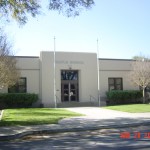
Located in the center of Fullerton is a resource of inestimable value, overlooked by almost everybody in and outside of City Hall: Hillcrest Park. Included in an early vision of the city it followed upon the City Beautiful, and natural urban park elements of the Progressive movement; and coincided nicely with the new auto culture of the 1920s, positioned as it was, along the original Highway 1.
Developed fully during the Depression in a rustic mode, the park soon after began a long decline into municipal irrelevance, and if anything, seemed to be perceived by many as a liability rather than a great asset. This tragic trajectory is a shameful blot on Fullerton’s history and is akin to placing your eighty-five year old mother in a criminally negligent nursing home.
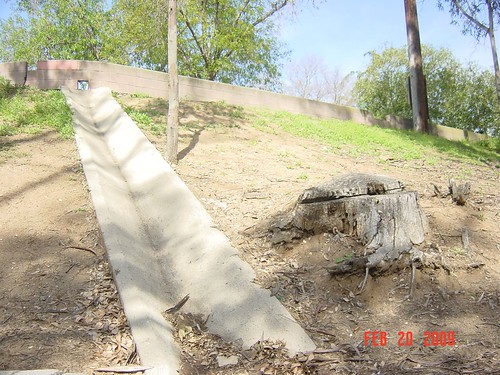
After Don Bankhead and Fullerton’s Finest chased out the acid-dropping hippies in the 1960s, the park became a haven for perverts; trees began to die and were not replaced; erosion claimed many of the north and west facing slopes and was not arrested; as the infrastructure crumbled it was replaced by City Engineer Hugh Berry with incongruous cinder block walls and concrete light poles.

In the mid-1990s Redevelopment Director Gary Chalupsky, in a philanthropic mood, decided that Redevelopment funds could be used to address Hillcrest Park issues – the first official over-the-shoulder glance toward the park in years.
And here, dear Friends, the story turns from a chronicle of benign neglect to one of outright incompetence and, one might plausibly argue, a form of bureaucratic malevolence.
In 1996 the usual scoping/charette pantomime was performed with an historic park landscape architect, specially imported from Riverside. An odd thing happened: every time the consultant prepared a list of priorities for the park, the Community Services Department’s wishes kept getting pushed to the top. The Director of Community Services was Susan Hunt, a woman long known for her mindless turf battles with her constituents – (including the Isaak Walton Cabin in Hillcrest). Hunt was determined to hijack the process and divert resources from where they were needed to facilities that she and her department could control and perhaps even profit from.

Hunt was successful. The consultant, knowing whom it was important to please, seemed only too happy to abet the fraud that was perpetrated. The city council (including current Jurassic members Bankhead and Jones) went along. Chris Norby was there, too. Now he’s in charge of the County’s parks.
A new playground replaced the old one in the Lemon parking area even though no one had complained about the existing one that parents seemed to like. More egregious still, a new facility (known as Hillcrest Terrace) was built behind the Veteran’s building that could be rented out for social functions. But the real needs of the park – slope stabilization, plant cataloguing and replacement, the removal of inappropriate elements – went unaddressed – and the problems have continued unabated to this day, ten years later, as interest in the park waned again.
Last fall the City once again roused itself from its somnolence and created an ad hoc committee to consider issues related to Hillcrest Park. The time is, perhaps, propitious. Susan Hunt has disappeared into an overdue and well-compensated retirement, current Director Joe Felz is much more amenable to citizen input. It’s time to reclaim this park.
Hillcrest is still in the Redevelopment Area and remains affected by indisputable blight. This should become a priority for Redevelopment Director Rob Zur Schmied.
While we wonder if the Hillcrest Park committee will actually display the necessary independence from staff manipulation, and that they possess the necessary technical abilities, we wish them well. And we encourage citizens to make sure that this time any assessment of Hillcrest will objectively address the needs of the park and report directly to the City Council. Recommendations should be included in the City’s Capital Budget.
Hillcrest Park can and must return to being the crown jewel of Fullerton’s parks.




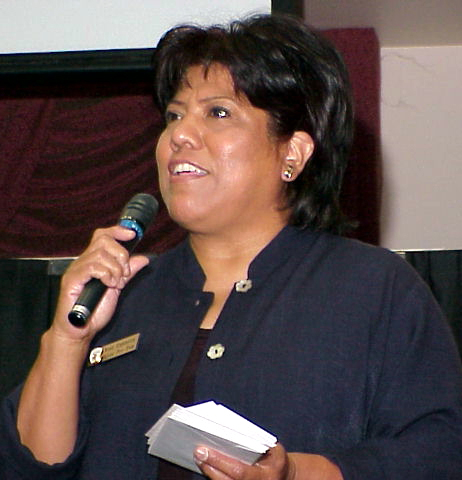


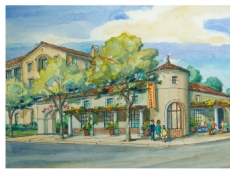
 As a school teacher, Quirk must know what causes obesity in children; eating too much of the wrong kinds of food and not getting enough exercise. Now the kids wont have to walk as far to get their subsidized happy meal deals.

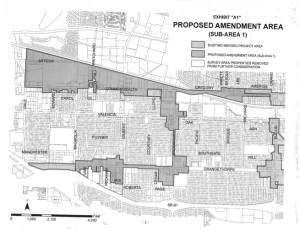 At its May 5 meeting, The Fullerton City Council will consider expanding the city’s redevelopment area by 1,165 acres. This would place nearly 25 % of the entire city under the redevelopment agency, with its expanded powers to use eminent domain, divert property taxes and subsidize development.
 The allegedly blighted area abuts my College Park neighborhood, along Raymond Ave. It includes a new Walgreen’s, the original Polly’s Pies and the Albertson’s where I shop. South of the tracks lies the newly-built Valencia Industrial Park, leased to near capacity, and the bustling Home Depot. It includes multinational distribution centers such as Yokohama Tire, UPS, Alcoa Aluminum and the Kimberly-Clark plant.
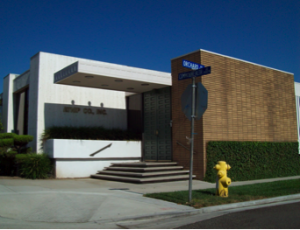 Also blighted would be the new Fresh’n’Easy shopping center at Euclid & Orangethorpe. The proposed blight includes the Fullerton Municipal Airport and adjacent aviation businesses. It includes unique regional specialty retailers on Orangethorpe like Bob Marriott’s Fly Fishing Store and the Harley Davidson Center, both the largest of their kind on the West Coast.
 Expansion means the agency will divert even more property tax funds from local government. Statewide, 10% of all property tax revenues are diverted by redevelopment agencies—that’s $5 billion annually. Most of this is at the expense of public schools, which then must be backfilled from the state general fund. But the state is now broke, and the backfills can’t be maintained without the massive new tax hikes proposed for the May 19 ballot. Redevelopment also diverts funds from the city’s general fund with an estimated $100 million loss to the municipal budget over 45 years.
 Compare the three shopping centers at Harbor and Orangethorpe: Metro Center and Fullerton Town Center received massive public subsidies, while Orangefair was built and recently improved with purely private money. Compare the Knowlwood complex at Harbor and Commonwealth (with its fake second story), built with $510,000 in RDA subsidies, next to privately built Stubrik’s and Slidebar.
 But the temptation to get involved in purely private commercial ventures makes city government a major developer and landowner.