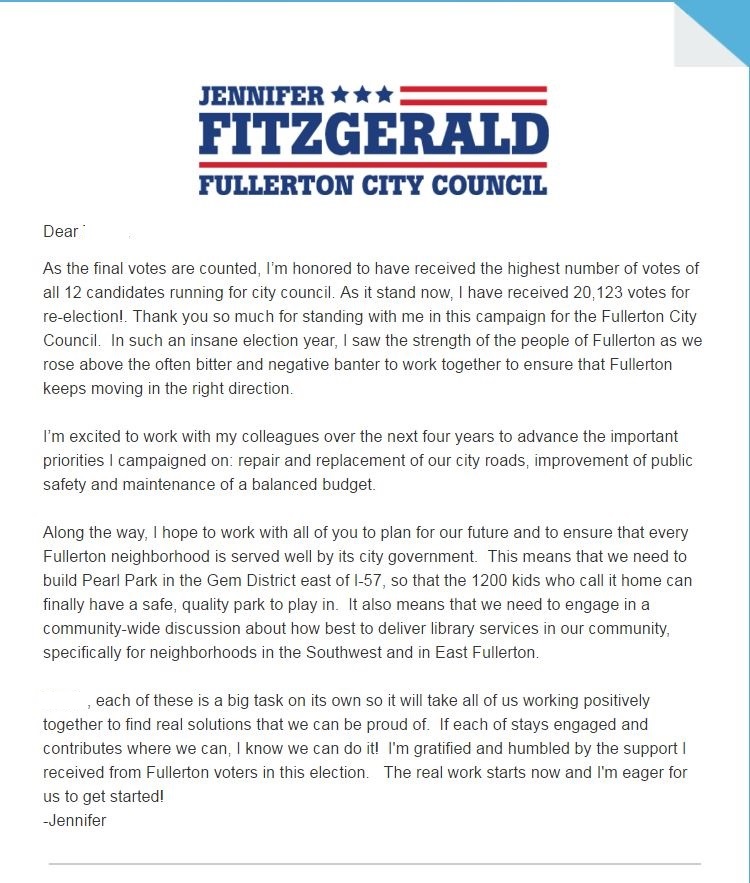
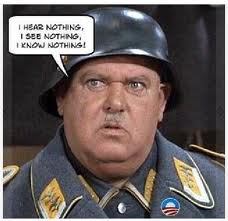
I got a letter from Fullerton’s Lobbyist-Mayor, Jennifer Fitzgerald congratulating “us” for rising above it by re-electing her. I love it when personal-agenda laden politicians complain about “negativity.” Generally they are just reacting to embarrassing scrutiny they’d rather not have to endure.
Here’s the missive:
Cut through the baloney to find the bullshit…
Ms. Fitzgerald is happy to share the issues she “campaigned on.” Road repair, more, and higher paid cops, and get this… a balanced budget! Now we all know that Fullerton’s budget has not been balanced since she got on the City Council four years ago. We’ve been leaking red ink worse than Laguna Lake has been leaking Grade A MWD water. The amount during Fitzgerald’s tenure runs in the millions. So not only is she still lying about having a balanced budget, but any other pipe dreams like cops and parks are going to have to come at the cost of draining our reserve funds even more.
Of course this means nothing to Ms. Fitzgerald. After all she is all about politics, not governance. She is a Vice President of Curt Pringle & Associates, an operation that has tried its level best to rip off Anaheim taxpayers to benefit Pringle’s clients. She will be long gone by the time Fullerton goes into receivership.
I really like the part about ensuring “that every Fullerton neighborhood is served well by its city government.” I guess that excludes the people who live in and around downtown Fullerton: it was only recently carved up into five separate council districts by Ms. Fitzgerald and her downtown bar pals like a Christmas ham, precisely for the purpose of disenfranchising the residents while the drunken party rolls merrily along.
And then there’s the part about having a “community-wide discussion” about providing library services for Southwest Fullerton. Quite delicious irony coming from the head of a city government that can’t afford to keep the Hunt Branch Library open; or does she really believe nobody is paying attention?
Finally, I note that “working positively together” is code: what it really means is not criticizing the massive budget deficits; not complaining because there is no adult supervision over the cops; looking the other way as the Lobbyist-Mayor herself helps cover up the madcap motoring adventures of her City Manager returning home from her own election night party.
Well, you know, I just don’t feel like it.
And now, Friends, please share any negative banter in the comments section we thoughtfully provide, below.
What? We can’t hear you. You’re going to have to speak up.
Here is the third installment of Professor J.H. Habermeyer’s essay on the means and methods local government uses to keep the citizenry at bay.
The Third Wall
Once the vast majority of potential scrutineers has been successively winnowed out by its own indifference, by pseudo-technical obfuscation, and by awkward meeting times, a hardy type of citizen remains: the man who has steeled himself to learn of an issue; who has cut through enough of the bureaucratic gobbledygook to have at least a passing familiarity with the gist of the topic; and who has rearranged a busy schedule to attend a hearing on said subject.
The Hearing! And now we advance apace to confront perhaps the cruelest hoax in the the local government’s repertoire.
We are all familiar with the quaint image of the New England township or village council meeting: a handful of honest selectmen addressing themselves and the town’s business to their neighbors. Such an ennobling image is now a far cry from the typical local government meeting that is run by professional bureaucrats employed for their alleged expertise, and whose arrogance has been fermented by years of education, training, and wielding of this “expertise” – regardless of the selfish likes or dislikes of their agency’s constituents.
The modern public hearing is run much more like a corporate board meeting than the picturesque town council pow-wow described above. And like any corporate executive conducting a board meeting, woe unto the chief bureaucrat who permits an item onto a public meeting agenda about which he has not fully briefed his political overlords and about which he is confident of majority, or ideally unanimous, approbation!
Once he ventures into the chambers of his elected officials, our intrepid citizen quickly notices that the seats reserved for these elected officials are elevated upon a dais, above those seated in the audience. These august personages are surrounded by their professional advisors and are physically separated from their constituents. This is telling. Very often the municipal executive himself is elevated, too – demarcating his stature as an equal with the elected representatives, and apart from the common herd.
And then the meeting commences: a scripted performance that puts the observer in mind of the heavily stylized kabuki; or, perhaps an Oscar Wilde drawing room farce without the wit. Very often the elected officials will read from actual scripts prepared for them by the bureaucrats. It is an embarrassing, but necessary price to pay to make sure the proper liturgical rites are observed.
The Deity is invoked; the Pledge of Allegiance recited. Thus the Almighty and the spirit of patriotism infuse the room – lending authority, sacred and profane, to the goings on.
The staff presents its proposals. The rhetoric and confoundation will put any self-respecting pettifogging lawyer to shame. Pre-arranged questions are posed and pre-arranged answers are produced. When necessary, witnesses are brought forth to shore up the credibility of the government. They, too have been bought and paid for with taxpayer’s money.
It hardly matters whether the answers are responsive or not. For any answer is seemingly good enough, and the more incomprehensible the better: comprehension on the part of the public would presuppose intellectual equality.
Finally it is the public’s turn to opine. Those who have endured the inconvenience of place and time will get to speak and ask questions themselves. Since many are made acutely uncomfortable by public speaking and some contemplate it with outright dread more potential critics are screened out; others will be intimidated by the surroundings or by the supposed expertise of the government’s phalanx of experts and lawyers. Even so, some may very likely remain.
Unlike the elected representative, the citizen has only a limited time to address his government and his questions may or may not be answered, depending on the whim of the chair. Finally, when the public is done the hearing is closed and the board blithely returns to its business and takes its pro forma vote. The dues required by the democratic republic have been paid.
The last official word we heard on the status of our City Manager post the Sappy McTree incident was that, besides apologizing, Joe Felz was on leave for 2 weeks.
The Official Story, if you recall, started on 15 November 2016 when the City Attorney, “The Other Dick Jones™“, told us that City Manager Joe Felz would be on leave for 2-weeks which prompted Jones to ask Mayor Fitzgerald to immediately put forth an emergency motion to appoint Gretchen Beatty as “Acting City Manager” and once that was done she’d stay in the Acting City Manager position until the Council voted to remove Ms. Beatty from said position. None of this was 1) an emergency or 2) needed as legally we don’t need a City Manager but I don’t expect the City Attorney to bother with such details as State Law.
The pertinent issue is that nobody on Council bothered to ask timely questions on this matter and so the fact that there wouldn’t be a Council meeting 2 weeks later (yesterday) never came up. Now 2-weeks has passed with the next Council Meeting scheduled for 06 December 2016 and it’s at THAT meeting that the Council would have the first opportunity to remove Ms. Beatty from her Acting position in order to put Joe Felz into his chair again.
Does that mean that Mr. Felz is back now twiddling his thumbs with nothing to do (2-weeks later as stated) or that he’ll stay gone until next week when the Council can remove Ms. Beatty from her Acting position or later due to the ongoing Felz/FPD investigation? Who knows with answers not exactly forthcoming from City Hall. We won’t even know if it’ll be on the Council Agenda until this coming Friday night.
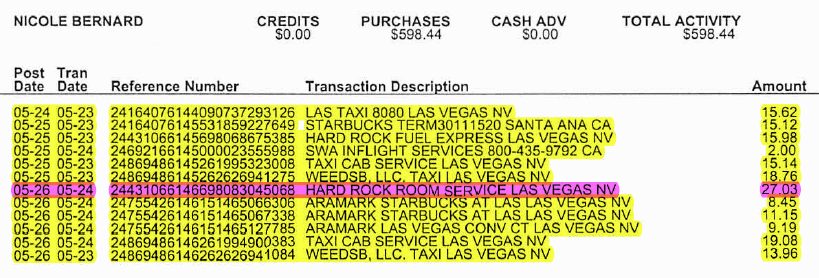
As for the inevitable “What difference does a week make?” question I will posture that it speaks to the nature of our City Government and the way our city is run. It’s slapdash thinking & haphazard decisions over even such basic calendar items that showcases the culture in City Hall where there is almost zero attention paid to details. This sort of intellectual laziness is how we end up with unaccountable bureaucrats spending time in Las Vegas or elsewhere while the city bleeds red ink and puts our kids further into debt with only high-density boondoggles on, and blocking, the horizon in order to offset the bloated spending.
We shouldn’t have to point this sort of stuff out but our so-called leaders can’t be bothered to do the jobs they voluntarily took and that leaves us, the malcontents and rabble-rousers, to do the job of making sure that somebody is paying attention.
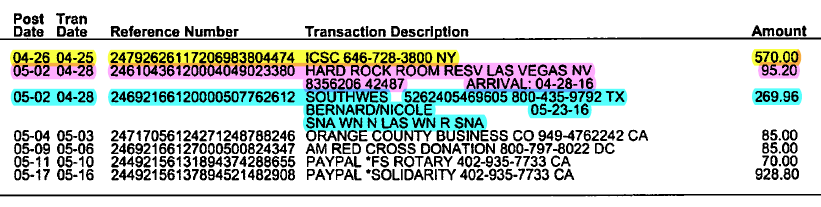
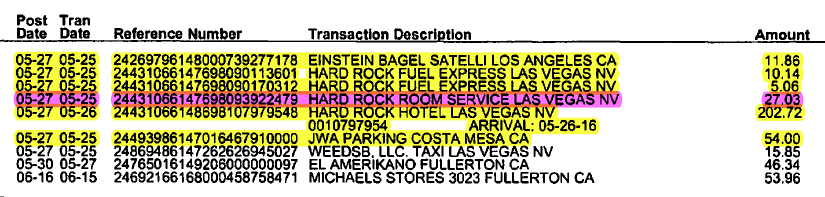
We’ve all heard the words “follow the money” as if said process will magically unveil itself to us. Certain insight and skills are necessary when confronted by a doozy like this one:
ICSC is the International Council of Shopping Centers who held their Global Retail Real Estate Convention May 22-25, 2016 in Las Vegas, which, ironically, cost $570 to attend, the same amount of the first transaction (above).
As if taxis, bagels, and Starbucks charged to the City procurement card wasn’t enough, two days of room service at the Hard Rock Hotel made the trip all worthwhile:
Just because there’s enough material in the City’s records to write blog posts like these… (more…)
As promised, here is the second installment of J.H. Habermeyer’s engaging essay on the methods local government uses to dissuade public dissent and protect itself and its undertakings.
The Second Wall
Now that the vast majority of qualified electors has decided to voluntarily to disenfranchise itself, and now that the bureaucrats have thoroughly confounded others with incomprehensible nonsense in the form of official reports, studies and agenda materials, we will address ourselves to the most charming scam perpetrated by local government – the charade known as the public meeting.
The meeting itself shall be addressed in the next section. Now I propose to discuss the scheduling aspects of the meeting: the Planning Commission may meet at 1:30 in the afternoon; the County Commissioners may meet at 9:00 in the morning; the City Council may start meetings at 4:00 PM.
You can successfully wager that the bureaucrats will be there in force, for they are being remunerated for their presence, as are any of the expensive expert consultants they have engaged to provide a professional imprimatur for their agenda. Will the public be there?
Fortunately for those inside the citadel, many, if not most electors have mortgages and bills, and other such economic irritations that necessitate gainful employment. Few employers will countenance an employee’s absence to attend the myriad public hearings held at all levels of a local government during working hours – often the very same meetings in which the initial inertial momentum is created for whatever project the bureaucracy is pursuing. That the quotidian necessities of life preclude the attendance of many citizens at meetings is never off the minds of those who schedule public meetings.
An ostensibly helpful government body may elect to hold meetings at a more convenient hour, such as in the evening, but we may be confident that many other items will be crowded on the agenda like so many shipwreck survivors on a small raft. And can John Q. Public get there soon enough after work and a hurried meal? Can he stay late enough to hear the item of particular interest to him? His potential antagonists have all the time in the world; does he?
A little while ago a friend of mine passed along a copy of an unpublished essay penned by now deceased J. H. Habermeyer, a professor of Political Science and Economics at RPI for many years. The Seven Walls of Local Government is a short, engaging and literary essay on the ways that local government erects defenses around its doings and, ultimately, how bureaucracies and bureaucrats use different techniques to obscure, obfuscate, defend, and protect themselves in what they do. The literary trope is The Wall.
I will present Professor Habermeyer’s essay in seven appropriate installments. The first portion includes his pithy introduction. Here it is.
The Seven Walls of Local Government
There is an old adage in political science circles that the business of government is to keep its business secret. This is so universally true that the idea has indeed become axiomatic – even among those for whom such a notion is not one to cause disapprobation. And yet, in a democracy, the instruments of government are theoretically answerable to a sovereignty that inheres in the people. Therefore, in a democratic government the niceties of popular participation must be paid obeisance while the individual government activities themselves will remain obscured by the clouds of procedural complexity, alleged expertise and technical obfuscation; thus: to represent government affairs through a glass, darkly.
This peculiar dance is found only in democracies. Totalitarian regimes don’t concern themselves with such refinements and the inhabitants and rulers in those regimes hardly even bother to pay lip-service to any institutions that purport to promote “citizen” involvement in government. In the Communist world these facades seem to be erected principally to annoy Western observers.
Nowhere is the interesting paradox better illustrated than the way that local governments in the United States deal with the thorny problem of excluding substantive citizen scrutiny and involvement, while ostensibly promoting it.
The precincts of local government may be conceived as a citadel comprised of seven concentric walls protecting the inner sanctum sanctorum. As the inner rings tighten, so the width of the gate in each shrinks. Each wall defends the denizens of the citadel from outside scrutiny, criticism and retribution. Each wall serves to protect the citadel by winnowing out potential invaders who will find it increasingly onerous to pass through the portal in each of the seven perimeter fences.
It is, of course, a given, that at just about any particular time a majority of elected representatives in each government have abdicated their own representation of popular sovereignty to the greater good of defending the citadel from their own constituents. This situation is in no way peculiar; in fact, it is the rare case indeed where a significant minority, let alone a real majority of public representatives are willing to put their obligation to the public ahead of their fealty to the established bureaucratic order. This situation reflects fascinating psychological and practical political topics in its own right, but will these will not be addressed in this essay.
The First Wall
It’s an ironic and sad fact that the first and most effective barrier to public participation and oversight of government activity is largely erected by the public. This wall is the institutionalization of ignorance and apathy on the part of the public itself – a public that chooses to be unaware of what is going on and/or is either too lazy to participate, or is resigned to the fact that participation doesn’t matter. To the extent that the other six walls are effective such apathy is certainly understandable. To the extent that this is used as a pretext for laziness, it is reprehensible. Governments can be relied upon to use, and abuse this apathy.
It is now typical for local government jurisdictions to publicize and notify the public of their doings. We may rest assured that such ostensible transparency was never initiated by governments themselves, but rather was imposed by well-meaning reformers. Yet it is part of the cost of entertaining the democratic ideal. In any case, the annoyance is comparatively small and the payoff in validation is enormous.
In many cases legal requirements now require publication of municipal government actions in newspapers of local circulation. Certain actions must be advertised by posting signs within the vicinity of effected property. Local councils will post copies of their agendas on the premises and mimeographed copies of agenda materials may be acquired, usually at a cost, by interested citizens. These rules and practices, while followed by jurisdictions according to law or custom, can be generally counted on to follow bare minimum standards. Whether posted notices remain posted, whether anybody reads the tiny print in the newspaper, and whether anybody can make it over to the town council to read the agenda is a matter of indifference to local decision makers.
Once such materials are perused another problem immediately becomes apparent. This is the use of incomprehensible governmental jargon that can be counted upon by its practitioners to help intimidate or bamboozle the public. This rather picaresque fraud is one of the most effective arrows in the bureaucracy’s quiver. The deployment of pseudo-technical jargon, confusing acronyms, and a torrent of useless verbiage in government reports, publications, and notices can surely be relied upon to dissuade all but the most intrepid to attempt to fathom the sacred mysteries therein described.
While it is clearly not practical to individually notify every citizen of every impending action or policy decision, it is cynical indeed to pretend that the bare minimum notifications and descriptions as they are typically pursued constitutes informing the public. And this is where the consequences of an apathetic citizenry come into effect: the vast majority of a political division may have deliberately and effectively disenfranchised itself of what should be a sovereign authority. Is it adequate to merely acknowledge representative republican government and walk away from the responsibility of further participation? The answer is clearly: no.
At this juncture I note the rare occurrence of wide public participation in isolated and pointedly controversial issues. When some potentially obnoxious land use is proposed by the local authority, or some new and annoying public levy is in the offing, it is not uncommon for the folk of a community to rouse themselves into a state of political agitation. In these rare instances the bureaucracy that proposes such activity must brace itself for initial public discomfiture and will rely upon the remaining six walls to defend its proposed activity. In many such cases, the public outcry subsides quickly; rarely does it not. If the public outrage reaches a sufficient crescendo some electoral change – aside from the normally scheduled ballot – may be occasioned. In this instance the popular sovereignty is very much exercised, and to the self-satisfaction of the participants. Their subsequent and speedy return to political somnambulism goes to reinforce the idea that spasmodic public participation, while perfectly justified, represents a very ineffective weapon against the inertia of government process.
Over five years years ago this blog published an essay (broken into bite-sized pieces) on the subject of local government and how it exercises its ability to effectively marginalize and ultimately disenfranchise the very citizens it is supposed to be working for. It is called The Seven Walls of Local Government and it has both scholarly and entertainment value.
For the reawakening of the blog from its almost four-year snooze, I propose to re-schedule this masterpiece for the edification of the Friends. Stay tuned.
Okay, Friends here’s a pop quiz. What do Jan Flory, Bud Chaffee, Jennifer Fitzgerald, Bruce Whitaker and Greg Sebourn have in common? Think for a second…
Got it? Of course, it was an easy question.
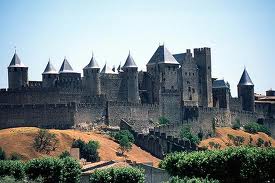
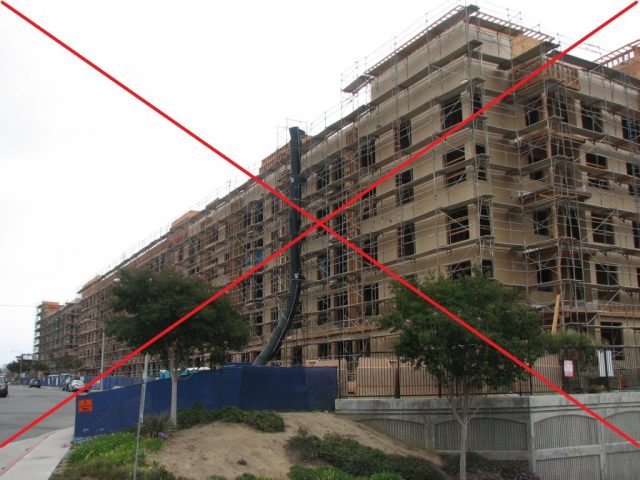
They are collectively responsible for the overdevelopment of Fullerton. Look around: Commonwealth, Orangefair, Santa Fe, each now, or soon to be home for massive, overbearing penitentiary-like apartment blocks.
Cliff Dwelling Is The Life For Me, or: Thing That Ate Fullerton…(image swiped from Orange Juice Blog)
The ridiculous and deathless “Amerige Court” monster is back, too being pimped by a guy named Cameron Irons.
Follow my easy method, and one of us will get rich!
Nelson wears his game face. Too bad we’re not on the same team.
And there’s very little need to hold our breath until the “College Park” upzone Godzilla rears its ugly head, once again.
Whatever the motivation of our “representatives” to jam ever more high-density residential projects into Fullerton, the result is the same: more burden on the City’s utilities and infrastructure, and above all, more traffic cramming our streets, costs that are carried by all of us as the developer makes his bundle and skips off to his next monster.
Is it really too much of an exaggeration to say that soon the major intersections at Harbor, Orangethorpe and Lemon will become virtually gridlocked at certain times of the day? Soon we may all have to find alternative ways to get around Fullerton.
It’s pretty clear that none of these lofty people have the best interests of ordinary Fullerton residents in mind. In fact, we seem to be nothing more than an annoyance to their big plans, that is if you can call helter-skelter development a plan.
Yes, Favored Friends! It’s time once again to play…The Mayor Game!
Every December our illustrious city council elevates one of their own to assume the august tile “Mayor.” The Mayor of Fullerton gets to preside at meetings and that’s about it. Almost a kind of booby prize if you think about it. And yet our elected representatives lust after the title, particularly if there is an election the following November.
Uneasy lies the head that wears the crown…
For years the selection was fraught with political tension as the repuglican old guard, orchestrated by the odious Dick Ackerman contrived to keep Dems (and Chris Norby) from ascension to this lofty estate. In recent years though, the process has become less political. The Council even adopted a process for non-partisan rotation in which it would be the turn of the that person serving longest without wearing the bejeweled tiara. This process is not enshrined in any law or code. It’s just sort of a Gentleman’s Agreement between people who really don’t trust each other – and for good reason.
The humble office of Mayor Pro Tem serves as the approach to the green and thence the flag.
Will the bonhomie last?
It was not a smooth landing…
The current Mayor Pro Tem is my broomstick-wielding former mistress, Jan Flory, who will mercifully be out of office in a week or so. This means that it is Councilman Bruce Whitaker’s turn to shimmy up the greasy pole. Whitaker became mayor in the Fall of 2012, but it wasn’t without nervousness since it was well known that Flory and Bud Chaffee opposed him. But Jennifer Fitzgerald was given a directive and fell into line. But that was then.
What, me worry?
Another wrinkle this time is that both Whitaker and Fitzgerald are rumored to be seeking the job of 4th District County Supervisor in 2018, and running with title of mayor next year would be just dandy, at least according to conventional wisdom.
So will the new council stick to its own policy or will they dump it? Will the new guy, Jesus Silva go along, or will he cut a deal with Fitzgerald and Chaffee to the exclude Whitaker? In the past it was not uncommon for councilmembers to gin up any stupid sort of excuse to keep the incumbent in place for another year.
In the end what it takes is three votes, and everything else is eyewash.
A writer for The Hornet named Madalyn Amato, reports that although an “independent investigator” has been engaged, nothing else has been forthcoming. The fact that the investigator, a law firm called Currier & Hudson, solely specializes in acting as defense counsel for government agencies, should send out appropriate warning bells. See where this is going?
In the aftermath of outrage, the bureaucratic playbook is being executed as expected.
First, ignore any criminality on the part of the district employee and announce an independent investigation, with the goal of diverting responsibility, or even better, procrastinating ’til everybody’s forgotten about the incident.
Naturally, the independent investigator is really just a carefully selected government defense pettifogger, hired to relieve the agency of as much liability as possible and absorb any leftover PR issues. Of course, hiring a law firm comes with desirable effects, such as the benefit of attorney client privilege. See, it’s easier to control an investigation if the investigator can’t actually reveal any findings detrimental to the institution.
The cleanup is underway
And now we wait. The employee takes a paid vacation, the real police fail to deliver a criminal investigation, and NOCCCD eventually pays out a quiet settlement to the victim who will make a deal in a civil courtroom. Nothing to see here.
Close enough…
And now let’s let Fullerton Junior College President Greg Schulz take us home via The Hornet article:
President Greg Schulz promised the college’s full dedication in reaching a conclusion regarding the incident.