The Nuisance
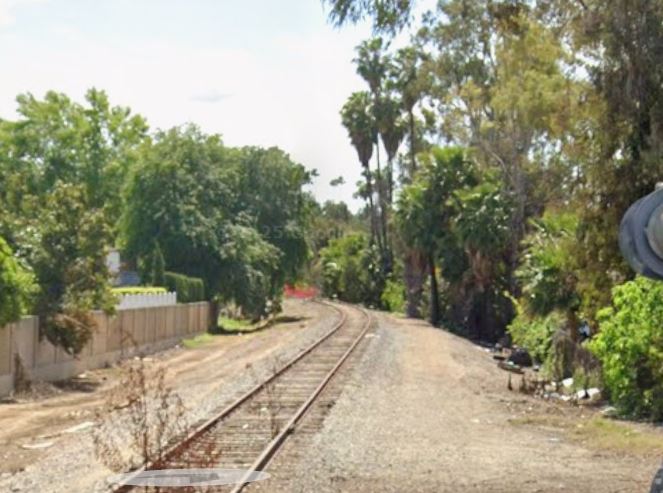
At last Tuesday’s Fullerton City Council meeting three gentlemen got up to speak about problems they’re having with the Union Pacific Railroad, specifically, the lack of policing along the unused line just south of Imperial Highway.
It seems that members of the homeless “community” have taken up residence along the unused right-of-way with the attendant trespass, trash, peeping-tommery, and even fornication. The residents are sick of it and the railroad has been uncooperative, they say. The situation even made the news.
The speakers at the meeting were quick to thank Nick Dunlap and Fred Jung and the Fullerton PD for their help and numerous calls for police help. Can the City persuade the railroad to do something?
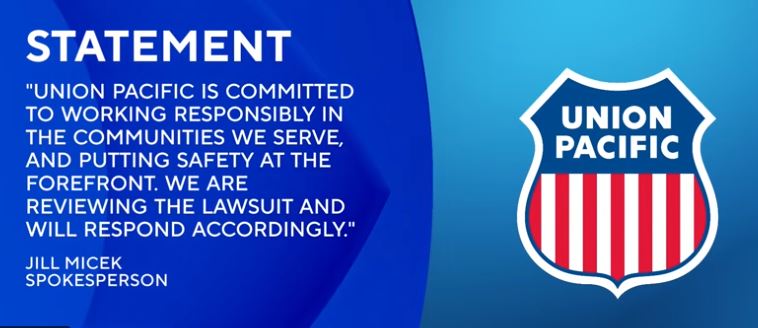
The giant railroad corporation issued a canned and useless response; possibly responding only because a lawsuit maybe be coming.
Since the line (according to reports) hasn’t been used for between twelve and seventeen years, you have to wonder what the UP has in mind. This track is the remnant of the UP line that came northward from Anaheim past the Hunt Wesson plant, know as the “Basta Crossing” and north through La Habra. The line south of the Basta Crossing was abandoned and sold off long a go. Obviously lots of people see the remaining portion as having potential for a rec trail.
Is the ROW legally abandoned through disuse? Not yet. That’s up to an arcane Federal agency called the Surface Transportation Board. Have prescriptive easements been established where bikers have created an informal parallel trail? I don’t know, and I’m not sure the railroad would even care despite liability issues.
The residents could help by cutting back their own overhanging trees.
California law regarding overhanging trees is primarily based on the principle that a property owner has the right to the use and enjoyment of their land. This means that if your neighbor’s tree branches or roots extend over your property line, you generally have the right to trim them, but with important limitations.
Here’s a breakdown of the key legal principles:
The Right to “Self-Help”
Under California Civil Code Section 3342, a landowner is not strictly liable for damage caused by a tree on their property unless they knew, or should have known, that the tree was a danger and failed to take reasonable action. This is often called the “notice rule.”
More directly, for overhanging branches, California common law establishes the “self-help” rule. This means:
You can trim the parts of the tree that overhang onto your property.
You must stay on your own property to do the trimming.
You cannot cross the property line to cut the tree without your neighbor’s permission.
You can only trim up to the property line.You cannot cut into the trunk or destabilize the tree.
The trimming must be done in a way that doesn’t damage the tree. If your pruning kills the tree or makes it unsafe, your neighbor could sue you for damages.
Who is Responsible for the Cost?
The Property Owner Being Overhung: You are generally responsible for the cost of trimming the branches that hang over your property. The law considers this maintenance of your own property.
The Tree Owner: The tree owner is only responsible if the tree is demonstrably dead, diseased, or otherwise a known hazard, and they have been notified of the danger but failed to act. In that case, if the tree or a branch causes damage, they could be held liable.
Key Exceptions and Important Considerations
Local Ordinances:Some cities and counties in California have specific tree ordinances that may override the general common law. These ordinances can protect certain types of trees (like heritage trees) or require permits for significant pruning or removal. Always check your local city or county codes first.
Fruit and Nuts:California Civil Code Section 3342(c) has a unique rule: If branches from a neighbor’s tree hang over your property, the fruit or nuts on those branches belong to the owner of the tree, not you. You cannot legally pick them.
Hazardous Trees: This is the most critical distinction. If you can prove the tree is dead, dying, or has a large, dangerous limb that poses an imminent threat, the situation changes. In this case, you should:
Notify the tree owner in writing.Send a certified letter detailing the danger and requesting they remove the hazard within a reasonable time frame.
If they fail to act, you may be able to hire an arborist to remove the danger and potentially bill your neighbor for the cost, or sue them for any damages that occur.
Practical Best Practices
Talk to Your Neighbor First: The best approach is almost always a friendly conversation. Many neighbors are unaware their tree is causing an issue and will be willing to work with you.
Put it in Writing: If a conversation doesn’t work, send a polite, written letter. This creates a record and can be useful if the matter escalates.
Get a Professional Opinion: Before doing any major trimming, consult a certified arborist. They can assess the tree’s health and ensure the work is done safely and correctly, protecting you from liability.
Document Everything:Take photos of the overhanging branches and keep copies of all correspondence with your neighbor.
In summary: For a healthy tree, you are responsible for trimming the branches that cross onto your property, as long as you do it from your side and don’t harm the tree. For a dangerous tree, the owner is responsible, but you must give them proper notice.
Sent from my iPhone
Well, thanks for that. I guess.
Most staged thing I’ve ever seen. CBS LA showed up to cover an item not agendized? Hahaha
I don’t know if this is to polish Fred’s image or block a trail, but either way it’s embarrassing. Have a bit more tact next time
What are you babbling about, tender Elijah? Look at the video. CBS didn’t show up for the meeting. They went to the site.
Block a trail? What on earth ? Where did you get that.
Really, try to do better. Trout isn’t paying you for this sort of dumb.
Actually they did show up . I spoke with them.but they didn’t go inside till after the three neighbors had spoken and left for home. Somebody at the meeting followed them back into the lobby and told them not to worry ,they could get coverage on the city website.
This is a job for Fullerton’s police posse…time to break out them horses!
Cleaning up and triming the trees back there will send the varmits scurrying. Putting a sign up, as the city did to keep the bikers out, will increase the usage for unlawful activity
Is this rail line near Imperial Highway the same one that used to also run through the City of Brea just south of Lambert? Because the Brea portion of that line was closed and turned into a pedestrian park several years ago.
You may be thinking of the old Pacific Electric right of way.
Sean is partially correct about the status of the old Anaheim Brea branch line. The line has been split into different sections with distinct fates.
The Abandoned Section (The Brea Trail):
The portion of the U.P. rail line that extended into Brea has been officially abandoned and converted into a bikeway. The Brea Trail begins at a flood control channel west of Brea Boulevard. From there, it crosses Brea Boulevard, crosses State College, goes under the 57 freeway, and currently ends at Birch Street. It’s important to note that this trail is not yet connected through to La Habra, although La Habra is reportedly working on extending it.
The Active Section (The Anaheim Branch Line):
The remaining segment of the Anaheim branch line has not been abandoned. This section runs south from La Habra goes along the Fullerton golf course, under Harbor Boulevard, and continues along Bastanchury before crossing Malvern. The tracks are still fully in place on this segment.
Distinguishing the Active Lines:
In that area, there are actually two parallel railroad rights-of-way. One is the Pacific Electric right-of-way, which is situated to the west of the Anaheim Branch Line. This line was abandoned in the mid 60’s and is now the Juanita Cook Trail. The other is the active Anaheim branch line.
Future of the Active Line:
While I’m speculating that this southern section might eventually be abandoned, there are no current plans for it. The U.P railroad may need to retain the line for potential future use, possibly to serve the industrial retired Hunt Wesson/Con Agra facility south of Malvern at Bastanchury. Although trains no longer service the buildings there, the area remains active with truck traffic, and the railroad may see strategic value in keeping the rail line intact for now.
Cool, thanks for the info.